The Great Pyramids of Giza are one of the Seven Wonders of the Ancient World — and from Hurghada, you can see them in a single day. The Cairo Day Trip from Hurghada by Bus is the most comprehensive, value-packed way to experience Egypt's most iconic ancient sites and the world's most extraordinary collection of pharaonic art, all in one legendary trip.
This is not a short excursion. It's a full 20-hour day that gives you time to properly explore each site — the Egyptian Museum's 250,000 artefacts, the Pyramids of Cheops, Chephren, and Mykerinus, the Great Sphinx, and the Valley Temple — with a knowledgeable guide, all entrance fees covered, and a traditional Egyptian lunch included.
The Journey — Comfortable Overnight Bus to Cairo
Pickup from your Hurghada hotel is between 1:00 AM and 2:00 AM (depending on your hotel's location). You board a high-quality, fully air-conditioned coach fitted with a toilet on board — essential for the approximately 6-7 hour journey to Cairo.
The night drive means you arrive in Cairo in the morning, fresh and ready to begin sightseeing, and the day is yours to explore two of the world's most awe-inspiring destinations. The return drive brings you back to Hurghada late evening, arriving around 11:00 PM.
This is Egypt as it should be experienced — immersive, unhurried, and guided by someone who knows every detail of what you're seeing.
The Egyptian Museum — 250,000 Artefacts, 5,000 Years of History
Your day begins at the Egyptian Museum at Tahrir Square — the largest and most important collection of ancient Egyptian art and artefacts in existence. With over 250,000 genuine artefacts spanning more than 5,000 years of Egyptian civilisation, this is not a museum you walk through in an hour.
Your guide leads you through the museum's most important collections: the Tutankhamun treasures (his golden death mask alone is worth the entire trip), royal mummies, colossal statues, painted sarcophagi, jewellery, papyrus documents, and everyday objects from ancient Egyptian life. The museum houses exhibits from every major period of ancient Egyptian history — from the Pre-Dynastic period through the Pharaonic golden age to the Late Period and beyond.
The Egyptian Museum is one of those rare places where the scale of what you're seeing only sinks in gradually — and your guide's knowledge transforms what would otherwise be an overwhelming experience into a deeply meaningful one.
The Great Pyramids of Giza — One of the Seven Wonders of the Ancient World
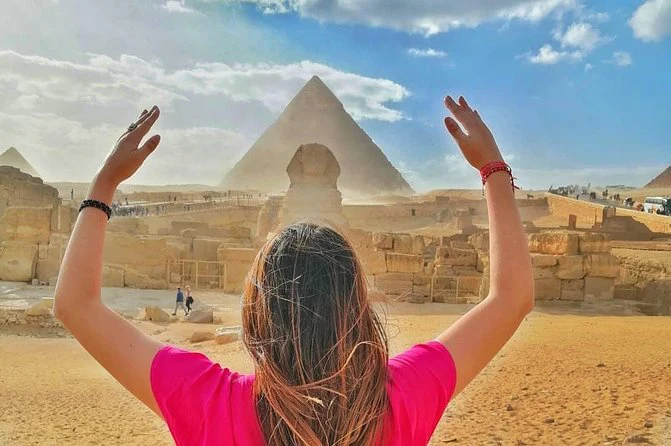
After the museum and lunch, you travel to the Giza Plateau — where three of the world's most recognisable structures have stood for over 4,500 years.
The Pyramid of Cheops (also known as Khufu) is the largest of the three and the only surviving ancient Wonder of the World. Its sheer scale — originally 146 metres tall, constructed from 2.3 million stone blocks averaging 2.5 tonnes each — is staggering in person in a way that no photograph fully captures.
The Pyramid of Chephren appears slightly taller from ground level due to its elevated position, and retains some of its original smooth limestone casing near the summit — giving you a sense of how all three pyramids looked when completed.
The Pyramid of Mykerinus is the smallest of the three, but no less remarkable for its precision and craftsmanship.
Your guide provides the full historical and archaeological context — the construction theories, the astronomical alignments, the burial chambers, and the political history of each pyramid's pharaoh — transforming a visit to ancient stones into a connection to one of humanity's most extraordinary achievements.
The Great Sphinx — Guardian of the Giza Plateau
The Great Sphinx — a 73-metre-long limestone figure with the head of a pharaoh and the body of a lion — has guarded the Giza Plateau for over 4,500 years. Standing before it in person, understanding that it was carved from a single enormous outcrop of bedrock during the reign of Pharaoh Chephren, is a moment of genuine historical gravity.
Your guide explains the Sphinx's history, its ancient name, the various erosion and restoration theories, and its relationship to the Pyramid of Chephren whose causeway it guards.
The Valley Temple of Chephren
The Valley Temple — the reception temple at the base of the Chephren causeway — is one of the finest surviving examples of Old Kingdom monumental architecture. Built from enormous blocks of red granite and alabaster, it was where the pharaoh's body was mummified and prepared for burial. The precision and scale of the construction, and the fact that it has survived largely intact for over 4,500 years, is extraordinary.
Traditional Egyptian Lunch
Between the museum and the Pyramids, you enjoy a traditional Egyptian lunch at a local Cairo restaurant — included in the tour price. This is a proper sit-down meal with a selection of Egyptian dishes, allowing you to rest and refuel before the afternoon's sightseeing.
Note: drinks at the restaurant are not included in the tour price.
Who Is the Cairo Bus Day Trip For?
- First-time visitors to Egypt who want to see the country's defining ancient sites in one day
- Anyone staying in Hurghada who won't be visiting Cairo separately and doesn't want to leave Egypt without seeing the Pyramids
- History and archaeology enthusiasts who want a guided, knowledgeable introduction to the world's most important ancient Egyptian sites
- Families with older children who can manage the long day
- Budget-conscious travellers who want maximum value — entrance fees, guide, and lunch all included
Important Notes
- Pickup is late at night: 1:00–2:00 AM. Book a breakfast box from your hotel reception the evening before — you'll want food on the bus.
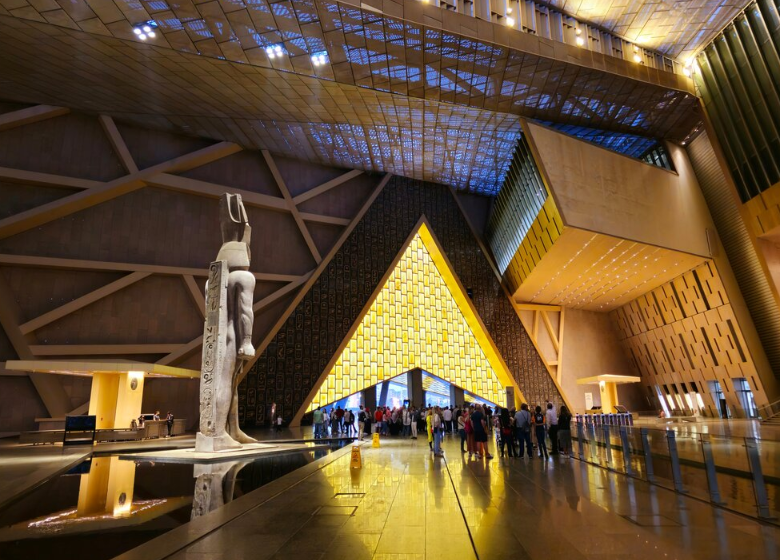
- This trip visits the Old Egyptian Museum at Tahrir Square, not the New Grand Egyptian Museum. The Old Museum houses the original Tutankhamun treasures and the royal mummy collection.
- Entrance inside the Chephren Pyramid is not included (optional extra on the day).
- Camera fees at the Egyptian Museum are not included.