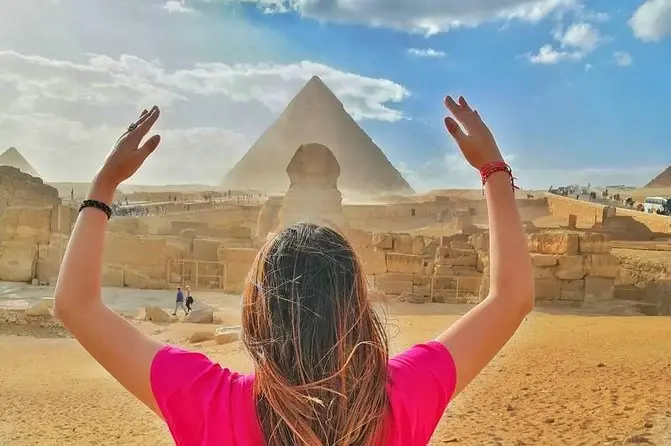
The Grand Egyptian Museum is the most significant new cultural institution of the 21st century — and it sits right at the base of the Giza Pyramids. Our New Grand Egyptian Museum & Giza Pyramids from Hurghada by Bus gives you a full day at both: the GEM's extraordinary 100,000-artefact collection (including the complete King Tutankhamun collection of 5,398 pieces displayed together for the first time in history) and the Pyramids of Cheops, Chephren, and Mykerinus, the Great Sphinx, and the Valley Temple — all guided by a qualified Egyptologist.
This is the definitive Cairo day trip from Hurghada. Not the old museum. The new one. Built for the 21st century, directly adjacent to the Pyramids, designed to present Egypt's ancient heritage at the highest possible standard.
The Grand Egyptian Museum — The World's Largest Archaeological Museum
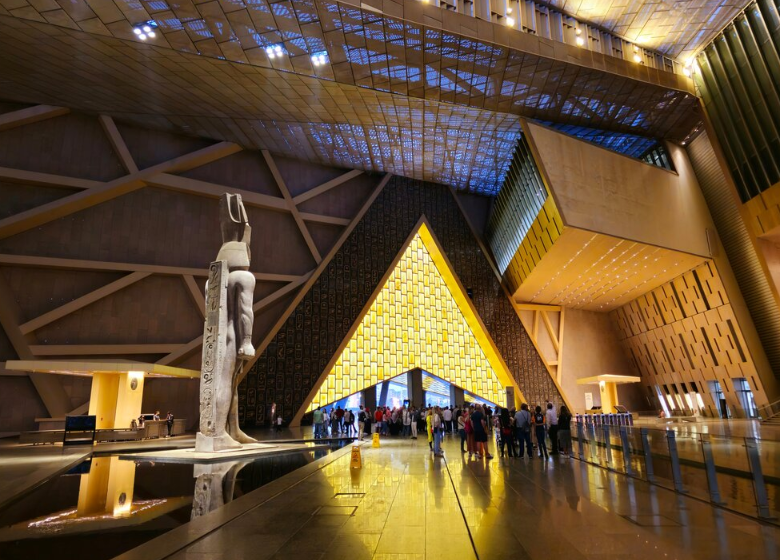
The Grand Egyptian Museum (GEM) opened in 2023 after two decades of construction and is the largest archaeological museum in the world. Purpose-built at Giza at a cost of over $1 billion, it was designed specifically to house Egypt's most important pharaonic artefacts in a state-of-the-art environment — with the Pyramids of Giza visible through the museum's dramatic glass facade.
The museum's collection exceeds 100,000 artefacts, of which at least 20,000 are displayed here for the very first time — pieces that were previously in storage and had never been seen by the public. The scale and quality of what's on display is simply unprecedented.
The Complete Tutankhamun Collection — 5,398 Pieces
The centrepiece of the Grand Egyptian Museum is the complete King Tutankhamun collection — all 5,398 objects from his tomb, displayed together for the first time in a dedicated gallery space. When Howard Carter opened Tutankhamun's tomb in 1922, he found it packed with treasures: the golden death mask (perhaps the most recognisable artefact in human history), golden coffins, the throne, the chariot, jewellery, weapons, musical instruments, food, clothing, and thousands of ritual objects.
Previously scattered across different display cases at the Old Egyptian Museum, the entire Tutankhamun collection is now presented as a single, cohesive exhibition in the GEM — allowing visitors to grasp the extraordinary wealth and detail of the burial assemblage for the first time. Your Egyptologist guide explains the significance of each major object and the story of the tomb's discovery and excavation.
Massive Statues of Pharaohs and Gods
The GEM's entrance hall is anchored by one of the most dramatic moments in any museum on Earth: a 20-metre-tall statue of Ramesses II, relocated from Cairo's Ramses Square to stand at the base of the museum's grand staircase. Ascending the stairs past this colossus — the pharaoh who ruled Egypt for 66 years and was arguably the most powerful king in ancient history — is a genuinely overwhelming experience.
Throughout the museum, a series of extraordinary colossal statues of pharaohs and gods line the grand staircase and galleries. The GEM was specifically designed around these monumental pieces, with ceiling heights and gallery proportions calculated to display them at their proper scale.
The Great Pyramids, Sphinx, and Valley Temple
After the GEM and lunch, the afternoon takes you to the Giza Plateau — directly next to the museum — to visit the three Great Pyramids, the Great Sphinx, and the Valley Temple of Chephren.
The Pyramid of Cheops (Khufu) — the only surviving Ancient Wonder of the World, 146 metres tall at completion, constructed from 2.3 million stone blocks. The Pyramid of Chephren — slightly shorter but appearing taller due to its elevated position, retaining original smooth limestone casing near the summit. The Pyramid of Mykerinus — the smallest and latest of the three, equally extraordinary in its precision.
The Great Sphinx — 73 metres long, carved from a single bedrock outcrop, dating to the reign of Chephren — guards the plateau as it has for 4,500 years.
The Valley Temple of Chephren — the granite and alabaster reception temple where the pharaoh was mummified, one of the finest examples of ancient Egyptian monumental architecture.
Your Egyptologist guide provides full historical and archaeological context throughout the afternoon, connecting what you saw in the GEM to what you're standing in front of.
Traditional Egyptian Lunch
Between the GEM and the Pyramids, enjoy a traditional Egyptian lunch at a local Cairo restaurant — included in the tour price. A proper sit-down meal to rest and refuel between the two extraordinary sightseeing sessions.
Who Is This Trip For?
- History and archaeology enthusiasts who want the world's most important pharaonic collection, properly guided
- First-time Egypt visitors who want the GEM experience — not just the old museum — combined with the Pyramids
- Anyone who wants to see the Tutankhamun collection as it was meant to be displayed: complete, 5,398 pieces, all together
- Photographers and architecture lovers who want the GEM's dramatic architecture alongside the Pyramids
- Returning visitors who did the old Egyptian Museum last time and want to experience the GEM
Important Notes Before You Book
- Pickup is 1:00–2:00 AM — a night bus departure is necessary to reach Cairo for morning opening. Pre-order a breakfast box from your hotel reception the evening before.
- Passport or ID card required — bring your identification document on the day of the tour.
- Guide availability: English guide available Saturday, Sunday, Tuesday–Thursday. German guide available Saturday and Wednesday. Please confirm guide language availability when booking.
- Entrance inside the Pyramid of Chephren is not included — it's an optional extra payable on site.
Price & Inclusions
At €80 per adult — children 6–11 years €45, under 6 free — this trip includes the return bus transfer, Egyptologist guide, entrance fees to the Grand Egyptian Museum, Giza Pyramids, Great Sphinx, and Valley Temple, traditional Egyptian lunch, and all taxes.